Five drawbacks of using Li-ion battery charger (STC4054/LTC4054)
The common Li-ion battery charger like LTC4054/STC4054 is a constant-current, constant-voltage charger for single cell Li-ion batteries. They usually don’t require any external sensing resistor or blocking diode. They come in a ThinSOT package, which make them ideal for portable applications. They are designed to work within USB Power specifications. It also has an internal block that regulates the current when the junction temperature increases, in order to protect the device when it operates in high power or high ambient temperature.
Introduction
Pin configuration

STC4054 Top View
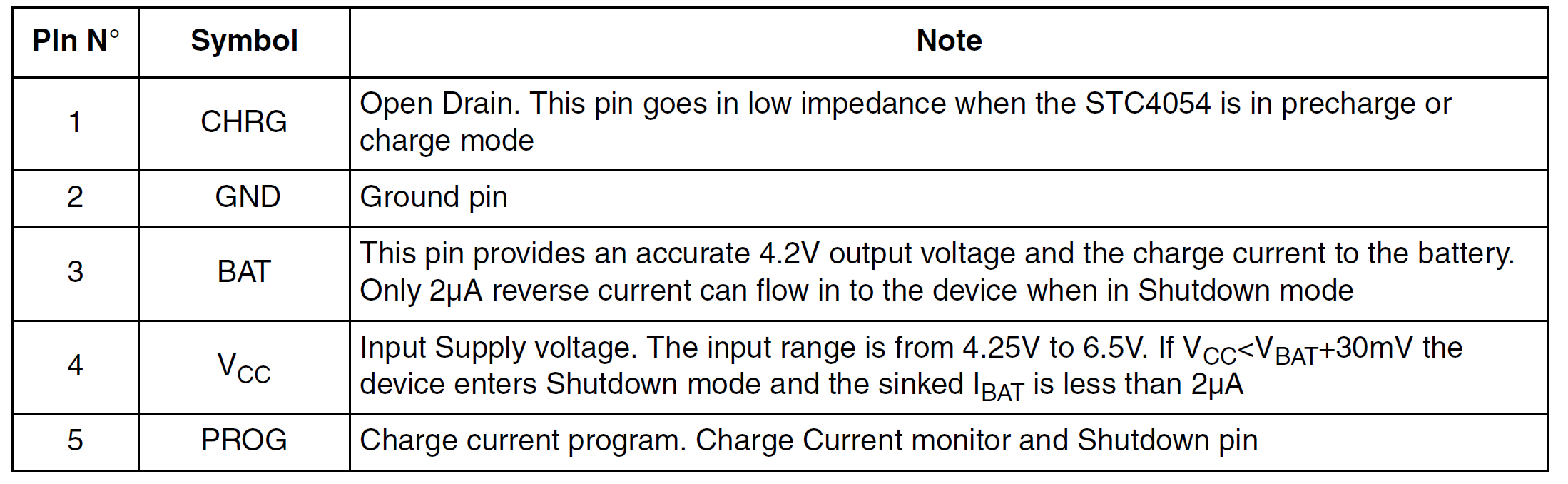
pin description
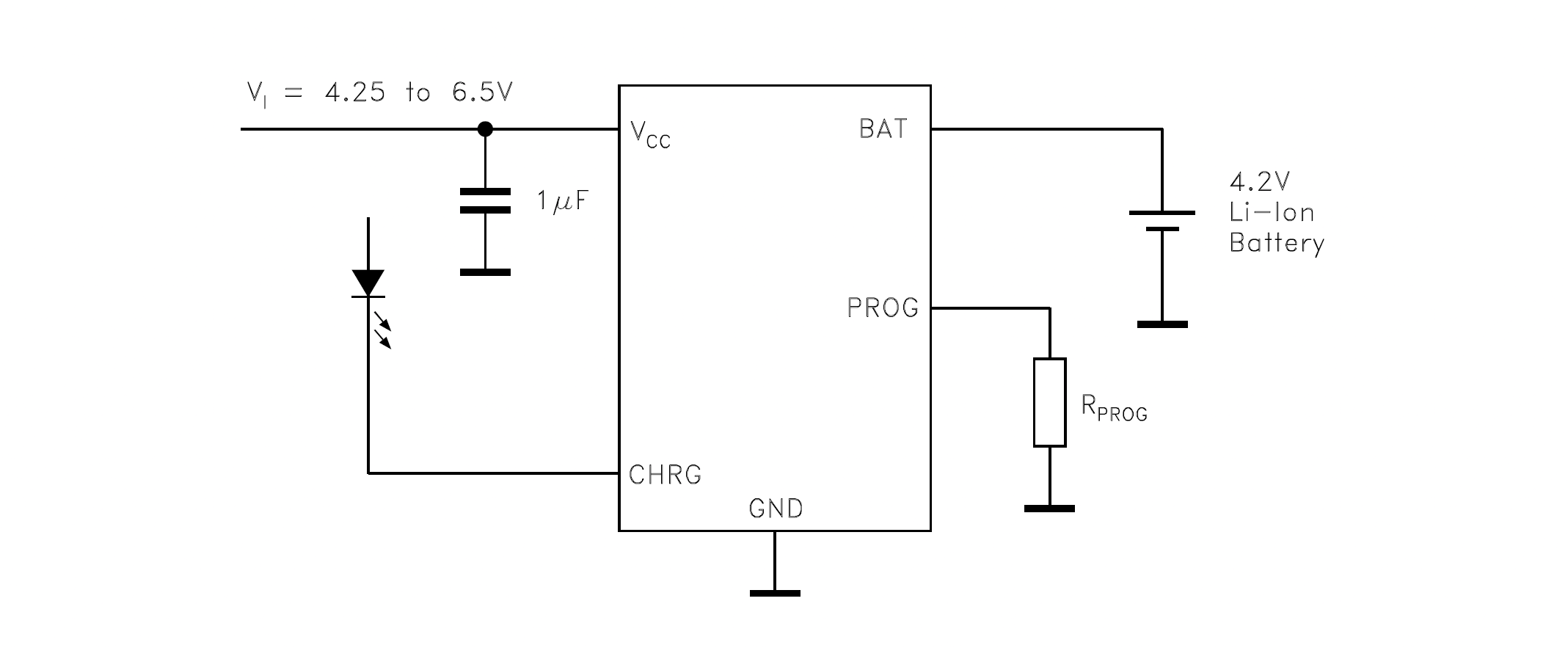
Application circuit
Here are five draw backs of using them in a device
Limited Charging current ceiling: The maximum programmable charge current is capped at 800mA via an external resistor. (This is too slow for larger capacity Li-ion cells, resulting in a very long charge time).
Lack of Advanced safety features: It lacks advanced telemetry/digital communication (I2C/SPI), or integrated negative temperature coefficient (NTC) thermistor pin control for comprehensive out-of-range temperature cutoffs as compared to modern multi-function power management ICs.
Linear Heat Dissipation: As a linear charger, it drops the input voltage (5V USB down to a battery voltage of around 3.0V – 4.2V) directly across the internal pass transistor as heat. If one charges a heavily depleted battery with a high current (up to 800mA), the power dissipation [Pd = (Vin - Vout) x Icharge] can cause the IC to get quite hot, leading to internal thermal regulation that automatically scales back the charge current.
Single cell limit only: The STC4054 is strictly engineered for single-cell 4.2V lithium-ion/lithium polymer batteries. It can not be used for
multi-cell series configurations (like 2S, 3S or higher) without adding complex external circuitry or a balanced management system.
No Battery connected stability: Linear charger ICs of this class can exhibit unstable output or voltage spikes when operating without a
battery physically attached.
STC4054 model simulation in LTSPICE
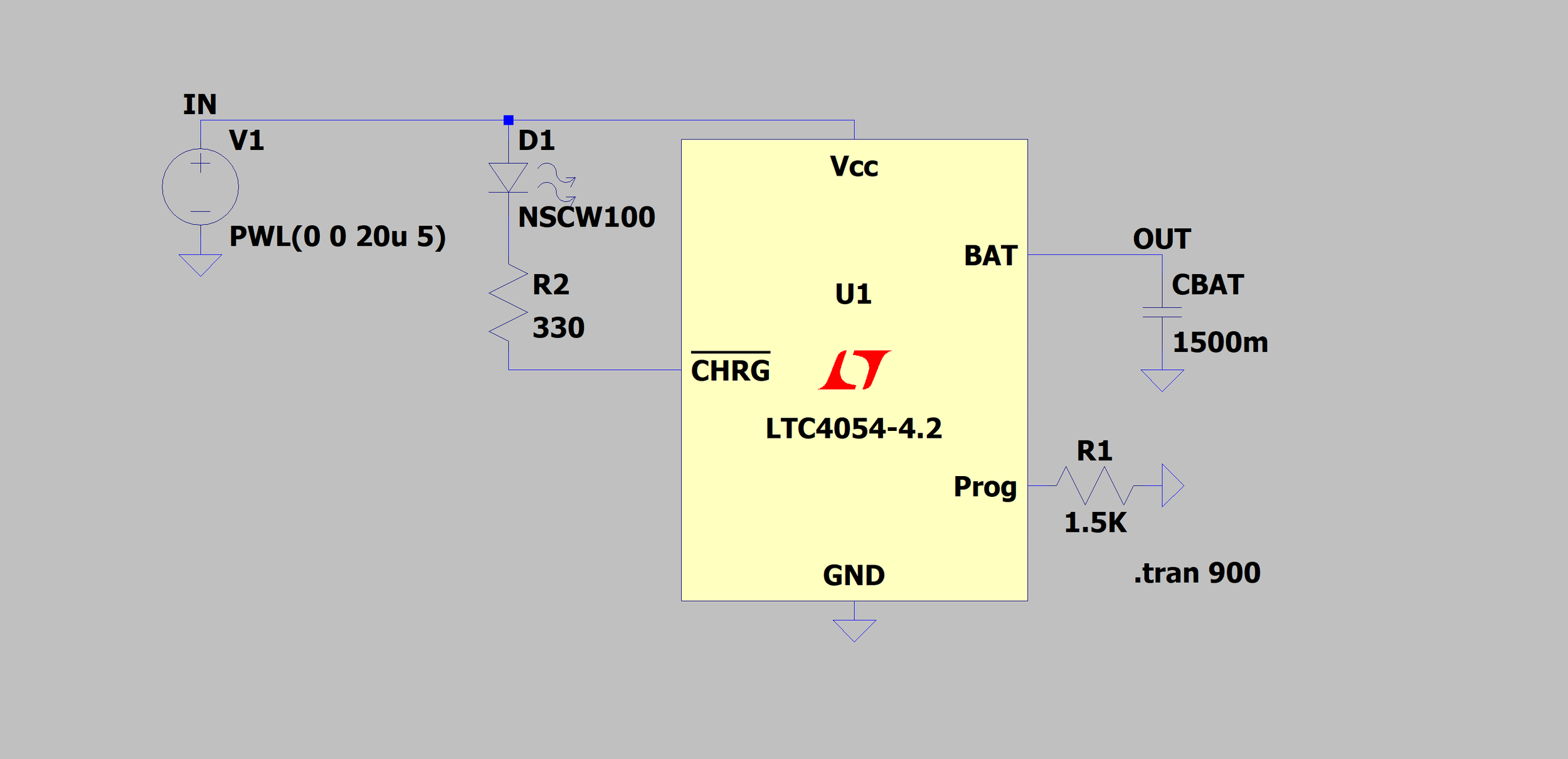
electronic circuit
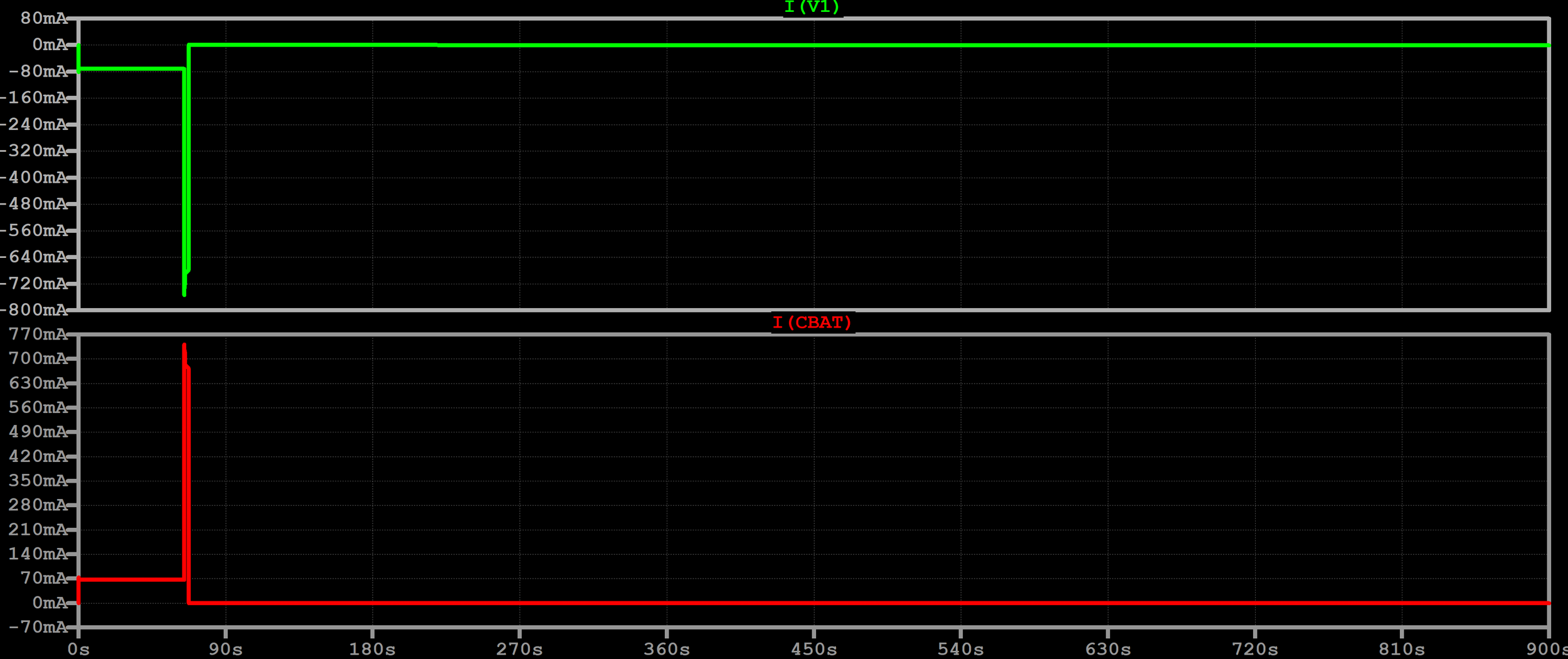
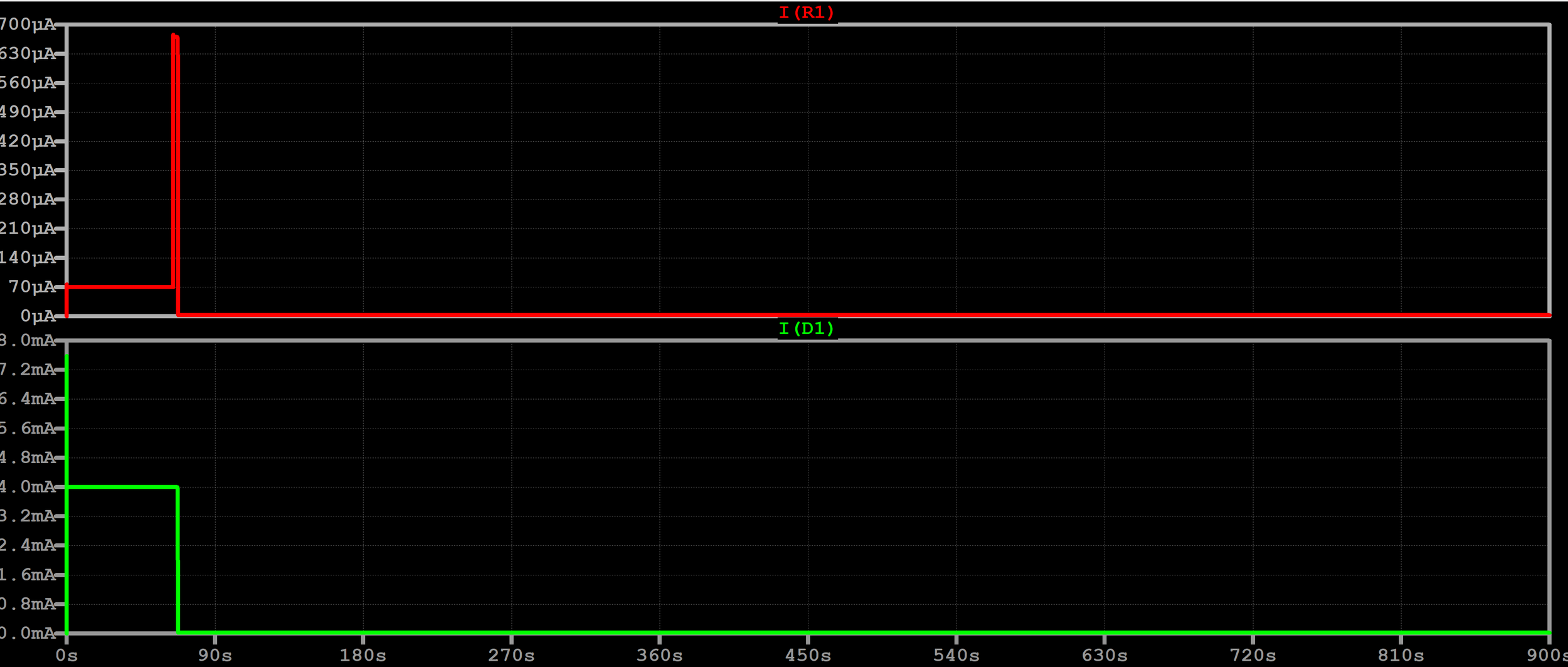
Input / output current
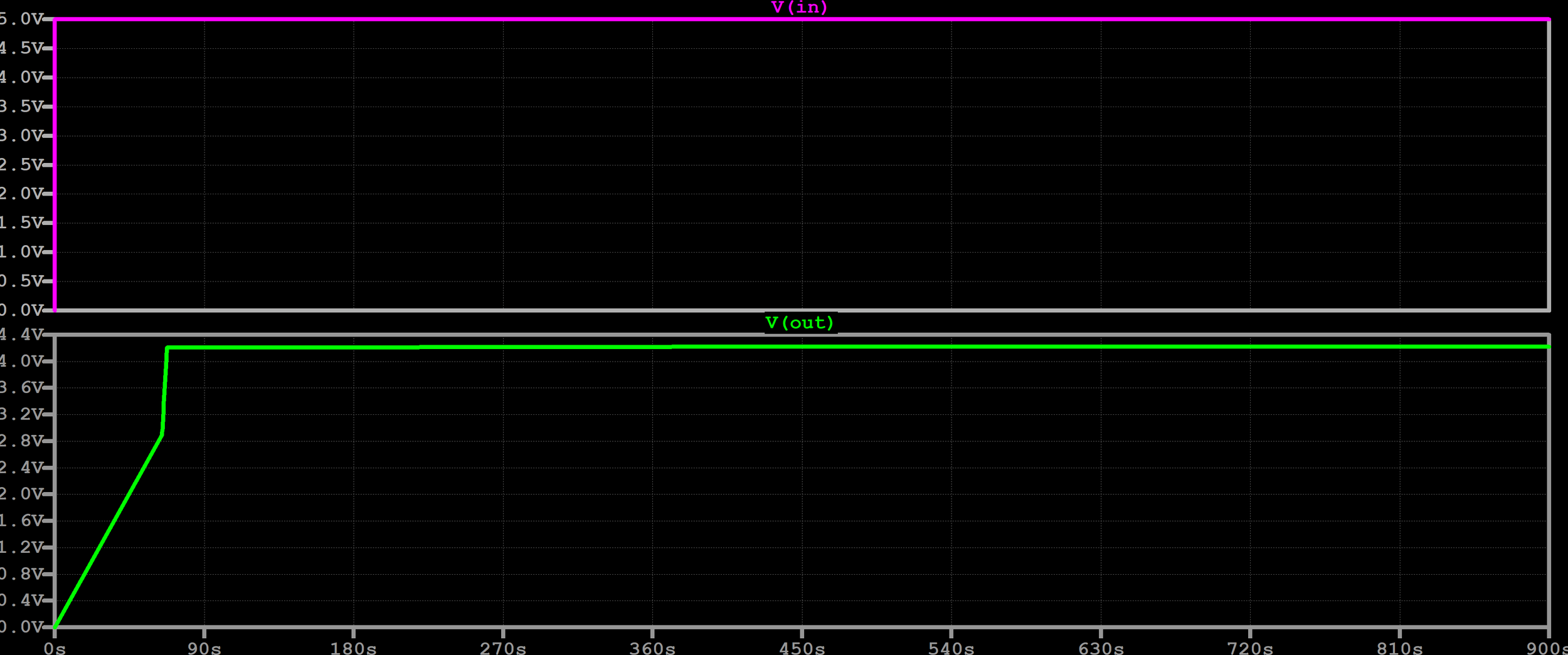
input and Output voltage